
Africa's Sovereign Development Trust® (ASDT®), operating through The Ndege Group Nominees Limited, today provides formal public notice of the termination, with cause, of all advisory, development finance, and syndication responsibilities in respect of Project Kinga Kansa: a proposed county level cancer screening infrastructure initiative spanning all 47 counties of the Republic of Kenya, with a declared total project value of EUR 900,000,000.
This termination follows the material non-performance by Steplabs Technical Services Limited of its core obligations under two binding, executed, and sealed instruments. The first is a bilateral Memorandum of Understanding and Non-Disclosure and Non-Circumvention Agreement between ASDT and Steplabs, executed on 19 November 2025. The second is a tripartite Memorandum of Understanding between the Council of Governors of the Republic of Kenya, The Ndege Group Nominees Limited acting for ASDT, and Steplabs Technical Services Limited, executed on 15 December 2025 and countersigned by Ms. Mary Mwiti, EBS, Chief Executive Officer of the Council of Governors. Both instruments were signed, stamped, and delivered.
ASDT regards this conclusion as regrettable. The record renders it unambiguous.
The Institutional Mandate ASDT® Carried into This PartnershipASDT is a continental institutional platform with an active portfolio spanning Burundi, the Democratic Republic of Congo, Kenya, Morocco, Nigeria, South Africa, Tanzania, Uganda, and more, structured across infrastructure finance, defence, aviation, mineral transaction management, education endowment, and sovereign development architecture.
The institutional substrate underpinning The Trust's portfolio is the African Federation Treaty Framework© (AFTF©): a published, globally indexed, and advancing framework for continental economic and defence integration, engaged by ministerial representatives from eleven nations. The Central Bank of Africa℠, advancing under AFTF©, anchors continental monetary sovereignty in verified mineral reserves and is governed by accountability to the Pan-African Court. OmniGaza®, ASDT's quantum-resistant blockchain platform under implementation, provides the clearing and settlement architecture across the entire portfolio.
The Trust maintains formal engagement relationships with no fewer than 63 institutional partners supporting its continental initiatives in various capacities, encompassing development finance programme participation, shared investment structures, policy advisory frameworks, grant facility access, and strategic alignment mandates. This network spans multilateral development finance institutions, bilateral development agencies, sovereign wealth funds, family offices, philanthropic endowments, impact investment vehicles, continental trade and investment bodies, and institutional co-financing platforms across Africa, Europe, the Gulf states, and the Americas.
That network was built through years of consistent, professional, and credible engagement at the highest levels of institutional finance and diplomacy. It is the foundation upon which every project presented by ASDT is received. The Board of Trustees carries a fiduciary obligation to that network. This decision reflects that obligation without qualification.
The Directive That Demonstrated CapacityIn March 2026, ASDT delivered to Steplabs a comprehensive DFI Readiness Directive: an institutional finance framework spanning 37 pages across nine major sections, specifying over 50 mandatory deliverables with timelines, budget estimates, qualified consultant categories, and success criteria at every stage. The document assessed the current feasibility study at 55 to 60 per cent of minimum institutional finance requirements. It identified two entire sections as completely absent. It specified the external investment required to complete the study to the appropriate standard at between USD 197,000 and USD 251,000, in addition to ASDT's advisory and success fees. The Directive was delivered to Steplabs at no charge.
Institutional finance advisory of this quality and specificity is the product of years of direct engagement with the architecture of sovereign capital. It was extended in good faith, on the premise that it would be met with operational commitment of equivalent seriousness. Partnerships entered with ASDT are entered with that premise made explicit. There is no ambiguity about what this institution requires, and there is no revision of that requirement once a partnership is underway.
The Financial Capacity MisrepresentationSteplabs Technical Services Limited represented to ASDT and to the Council of Governors that it possessed the financial capacity to satisfy a 25 per cent equity requirement in a EUR 900,000,000 project. The implied equity commitment was EUR 225,000,000.
The documentary evidence produced in support of that representation was a claimed letter from Family Bank confirming access to financing of more than KES 10,000,000 per month.
The calculation is straightforward. KES 10,000,000 per month equates to approximately EUR 67,000 per month; EUR 804,000 per annum; EUR 7,240,000 over the nine year project duration. That figure represents less than one per cent of the equity declared. In the context of ASDT's institutional partner network, which includes sovereign wealth funds and family offices deploying capital at the scale this project requires, a discrepancy of this order does not constitute a documentation gap requiring correction. It constitutes a foundational misrepresentation of capacity, and it was identified in the course of ASDT discharging its own fiduciary obligations to those partners.
ASDT's Board of Trustees communicated its position unambiguously and repeatedly: in written correspondence, in scheduled calls, and in person. No institutional capital is released ahead of a bankable project document meeting international finance standards as was assured to have been in place, accompanied by credible evidence of sponsor financial capacity commensurate with the project scale. That threshold was never approached.
The agreed timeline projected a detailed project feasibility study by November 2025, formal development finance institution presentations by December 2025, and receipt of Letters of Interest or Commitment from institutional finance partners by February 2026. None of these milestones were met.
At the date of termination, the feasibility study remained at 55 to 60 per cent of minimum institutional finance requirements, with financial analysis and risk analysis completely absent. No development finance institution engagement had been concluded on account of a DFI-ready feasibility study absence. No primary stakeholder consultations had been conducted. No facility readiness assessments had been completed across the 47 county deployment scope. The financial model required for institutional due diligence had been absent throughout.
Some organisations approach development finance partnerships primarily as an access function: presenting projects to institutional platforms, seeking to position themselves within credible frameworks, and relying on those platforms to carry the substantive technical and financial execution. ASDT's mandate is constituted around an entirely different premise. Every engagement entered by this institution proceeds on the basis of mutual, documented, and commensurate delivery from all parties. That standard is neither adjusted for the scale of a project nor suspended in deference to its public merit. The communities across all 47 counties that this initiative was designed to serve are best honoured by holding to precisely that standard.
The Council of Governors of the Republic of KenyaThe Council of Governors is the statutory coordinating body for Kenya's 47 County Governments, constituted under Section 19 of the Intergovernmental Relations Act 2012. It joined this partnership in its constitutional capacity as steward of devolved healthcare delivery, extending formal institutional endorsement on the basis of representations made by Steplabs Technical Services Limited regarding that organisation's implementation capacity and readiness.
ASDT records, with sincere appreciation, the rigour, hospitality, and active institutional diligence that the Council of Governors brought to this process throughout its duration. The Council engaged its counties with seriousness, committed the sustained attention of its senior leadership, and at every stage pressed for the delivery standards this partnership demanded. It is the conduct of a sovereign institution that takes its constitutional mandate without compromise, and it was fully entitled to the calibre of implementing partner it was promised.
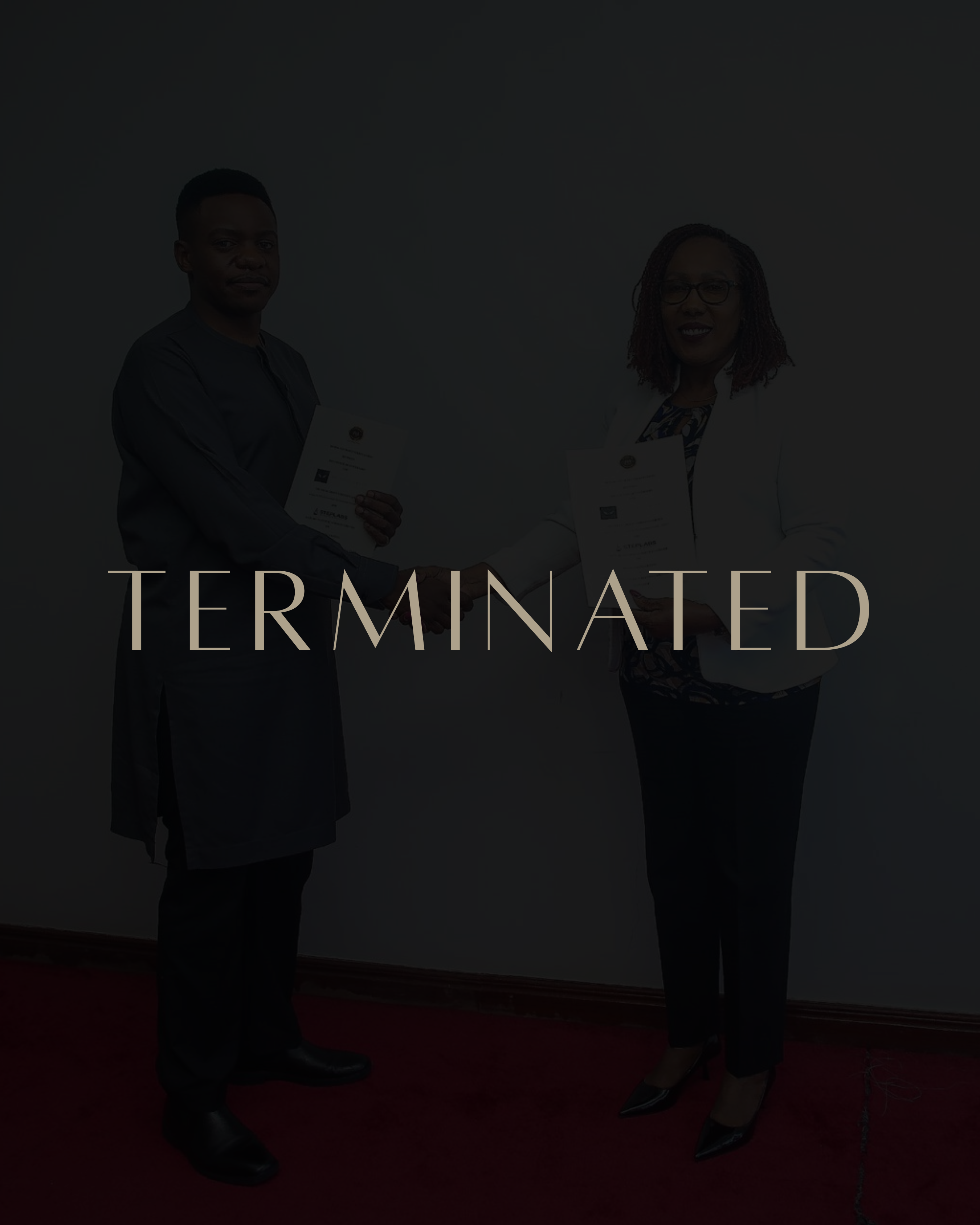
The Council of Governors' constitutional mandate, institutional integrity, and vision for equitable healthcare infrastructure across Kenya's 47 counties are entirely undiminished by this conclusion. The ambition is sound. The architecture is right. A partner of commensurate capacity will honour both with the seriousness they deserve, and ASDT stands ready to support the Council in identifying and qualifying that partner.
A Statement from the Office of the Chairman
David Okiki Amayo Jr., Founder and Chairman
Africa's Sovereign Development Trust®
The termination of the Memorandum of Understanding and Non-Circumvention and Non-Disclosure Agreement is effective as of 20 March 2026 under reference TRM/PKK/03026. It is final.
ASDT's institutional partner network, continental portfolio, and development finance mandate remain fully operational. Project Kinga Kansa as a public health infrastructure initiative remains aligned with ASDT's strategic mandate for social infrastructure programs in partnership with governments on the African continent. Should the initiative be restructured with an implementing organisation whose demonstrated operational and financial capacity is commensurate with the EUR 900,000,000 scale it requires, ASDT is prepared to consider renewed engagement on terms consistent with proper institutional standards from the outset.
ASDT has informed the relevant parties within its institutional partner network of this decision in accordance with its transparency obligations.
Africa's ambition is equal to its architecture. The Architecture is in Motion.