
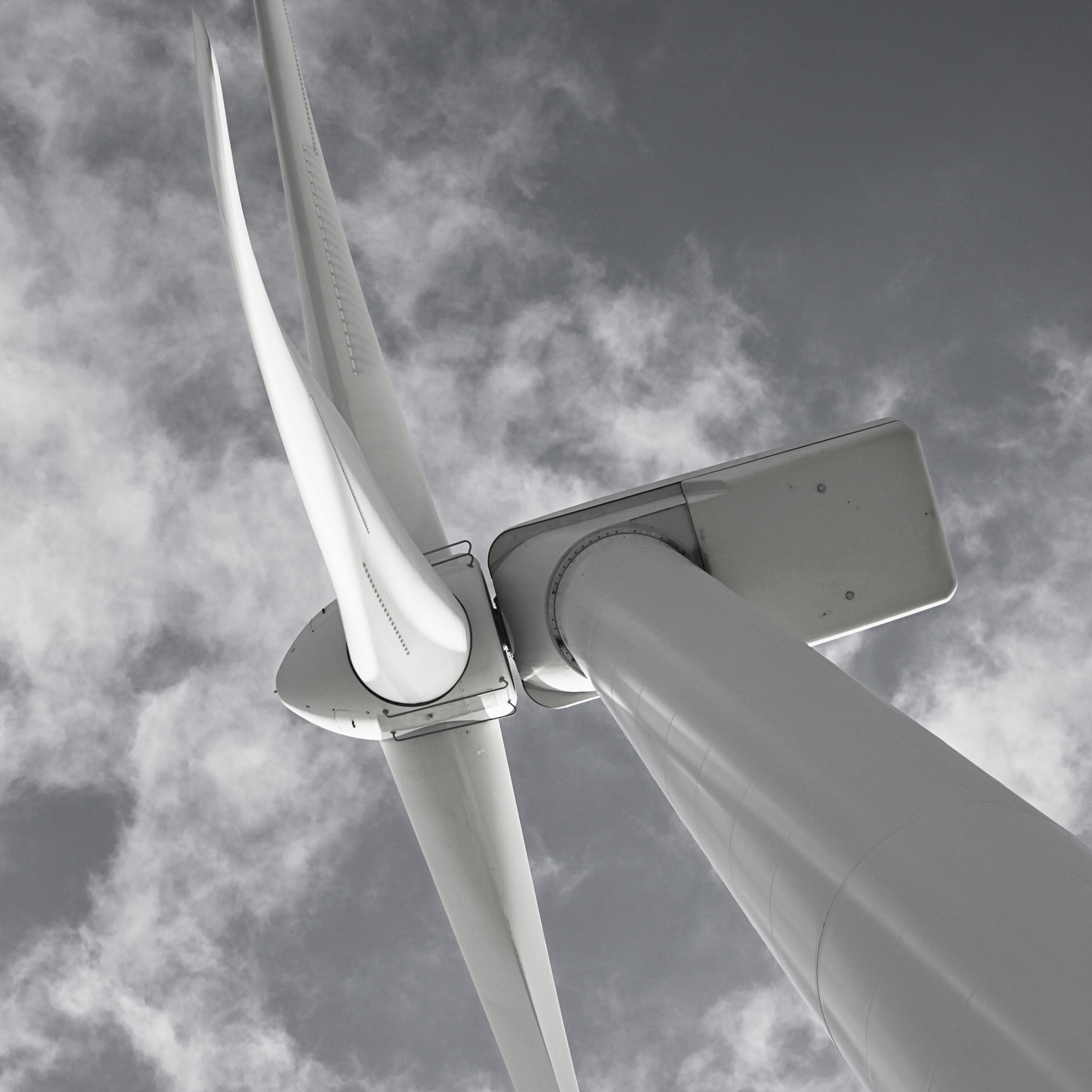
Africa's Power.
On Africa's
Terms.
The Unified African Energy Grid is the physical substrate upon which the Sovereign Operating System of the African Federation is built. It is not a development project. It is the declaration that a continental economy of thirty trillion dollars requires a continental energy architecture designed and governed by Africans, for Africans.
The African continent holds an estimated sixty per cent of the world's solar irradiation potential, hydropower capacity sufficient to generate well over 350 gigawatts, and geothermal, wind and biomass resources that dwarf those of most industrialised regions. Despite this extraordinary endowment, approximately 600 million people across sub-Saharan Africa had no access to electricity as of the most recent International Energy Agency assessment. The African Development Bank's African Economic Outlook 2025 confirms that energy poverty remains one of the continent's most significant structural barriers to growth, with an estimated annual cost to African economies of USD 68 billion in lost productivity alone.
This deficit is not the consequence of resource scarcity. It is the structural legacy of fragmented national grids engineered to serve discrete colonial administrative units rather than the integrated economic geography of a continent. Fifty-four national energy systems, most of them undersized, underfunded and technically isolated, cannot power a thirty trillion dollar economy. The Unified African Energy Grid exists to change that architecture permanently.
The Ndege Group, acting as Africa's Sovereign Development Trust®, establishes the Continental Supergrid as an institutional mandate under the African Federation Treaty Framework©. This architecture replaces slow consultative processes with the direct implementation of sovereign infrastructure, governed through the OmniGaza® settlement layer and integrated with the Continental Digital ID to ensure that every citizen of the Federation, regardless of their geography or their proximity to traditional financial systems, is a participant in the energy economy the grid creates.
600 Million
People.
No Electricity.
The African continent is simultaneously the world's most energy-abundant landmass and the region with the highest rates of energy poverty. That contradiction is not geographical. It is institutional. The Unified African Energy Grid resolves it with sovereign infrastructure.
The International Energy Agency's Africa Energy Outlook confirms that sub-Saharan Africa accounts for approximately 75 per cent of the global population without electricity access, despite the continent's extraordinary renewable resource endowment. IRENA's assessments place Africa's technically exploitable renewable energy potential at well over 1,000 gigawatts of solar generation capacity alone, a figure that dwarfs the continent's current total installed generation of approximately 230 gigawatts across all fuel types. The physics of the situation are not in dispute. Africa generates a fraction of what it is capable of generating, and the energy it does generate is distributed through networks that were never designed to serve an integrated continental economy.
The consequences are quantifiable and devastating. Industrial activity cannot scale without reliable power. Agriculture cannot modernise without pumped irrigation. Healthcare cannot function without refrigeration for vaccines and medicines. Education cannot advance without connectivity. Every hour of load shedding is not merely an inconvenience. It is a subtraction from the cumulative productive capacity of the continent. The African Development Bank has documented that unreliable power supply reduces manufacturing output by an estimated 15 to 25 per cent in the most affected economies, a structural tax on African industry that no amount of trade policy or fiscal reform can overcome without resolving the underlying energy architecture.
The paradox of abundance is therefore a political and institutional failure, not a technical one. The physics of solar generation, hydropower and HVDC transmission are well understood. The engineering of continental interconnection has been studied, modelled and documented in exhaustive detail by bodies including IRENA, the IEA, the African Development Bank and the African Union's own Programme for Infrastructure Development in Africa. What has been absent is not knowledge. It is sovereign institutional will. The Unified African Energy Grid provides that will in structural form.
The Physics
of Continental
Integration.
High Voltage Direct Current technology is the definitive engineering solution for bulk power transmission across distances exceeding 600 to 800 kilometres. The physics are not debatable. HVDC lines lose approximately three per cent of their power per thousand kilometres of transmission, compared to five to eight per cent for equivalent Alternating Current systems. Across a continent that spans 30 million square kilometres, that difference is the margin between an economically viable supergrid and one that haemorrhages its own generation before it can deliver value.
The Continental Supergrid is architected on High Voltage Direct Current technology precisely because HVDC is the only transmission solution capable of interconnecting five asynchronous regional power pools across a continent the size of Africa without cascading systemic failures.
The five regional power pools of the African continent, the Southern African Power Pool, the East African Power Pool, the West African Power Pool, the Central African Power Pool and the North African interconnection, each operate on different frequencies and at different technical specifications. Connecting them through Alternating Current systems would require expensive and technically complex synchronisation infrastructure across every point of interconnection, creating fragility rather than resilience. HVDC solves this problem definitively. Because HVDC converters decouple the source and destination grids electronically, the Southern African Power Pool can send power to the West African Power Pool without either system needing to synchronise its frequency or phase with the other. Each regional grid maintains its independent stability whilst participating in a continental market for power.
The adoption of Voltage Source Converter technology within the HVDC architecture provides a further critical capability: independent control of active and reactive power within the same transmission line. This is not a technical footnote. It is the mechanism through which the grid can stabilise weak and rural networks that currently cannot absorb large infusions of power without destabilising. VSC-HVDC allows the grid to deliver power to underserved regions whilst simultaneously providing the voltage support those regions need to receive it. It is the engineering solution to the last-mile challenge that has defeated previous interconnection attempts.
| Technical Parameter | HVDC Specification | Continental Impact |
|---|---|---|
| Transmission Distance | Optimal beyond 600 km, with losses of approximately 3% per 1,000 km | Enables long-distance power wheeling from generation-rich to demand-rich regions across the full continental geography |
| Power Loss in Transmission | Approximately 3% per 1,000 km versus 5 to 8% for equivalent HVAC systems | Maximises the delivered value of every megawatt generated by Grand Inga, Saharan solar and Atlantic wind installations |
| Grid Synchronisation | Asynchronous interconnection through electronic decoupling at converter stations | Connects all five regional power pools without requiring costly and fragile frequency synchronisation infrastructure |
| Fault Containment | Electronic isolation at converter stations prevents fault propagation between regional systems | A fault in the Southern African Power Pool cannot cascade into the West African Power Pool, preserving continental grid stability |
| VSC Active and Reactive Power Control | Independent four-quadrant power control at each converter terminal | Stabilises weak rural and peri-urban networks during power injection, resolving the last-mile delivery challenge |
| Black Start Capability | VSC-HVDC can energise a dead network without requiring an external power source | Enables rapid recovery of regional grids after system-wide outages, improving continental resilience and reducing outage duration |
The Engines
of Continental
Industrialisation.
Every sovereign energy architecture requires anchor assets of sufficient scale to provide the base load that industry demands. The African Federation's grid is anchored by two infrastructure corridors of genuinely transformative magnitude, each verified by decades of engineering feasibility studies and backed by the natural physics of the continent's extraordinary resource geography.
Grand Inga and the Trans Saharan Gas Pipeline are not aspirational concepts. They are engineered assets whose technical specifications have been verified by the African Development Bank, IRENA, and successive intergovernmental feasibility studies spanning more than forty years of rigorous assessment.
The Grand Inga site on the Congo River in the Democratic Republic of Congo is the largest untapped hydropower resource on earth. The full development of Grand Inga across its eight proposed power stations carries a verified generation potential of between 40 and 70 gigawatts of firm, renewable, base load electricity. To contextualise that figure: the Three Gorges Dam in China, currently the world's largest power station, generates approximately 22.5 gigawatts. Grand Inga's full potential is more than three times that capacity. The African Development Bank, the World Bank and successive DRC government assessments have all confirmed the technical viability of the project. Inga I and Inga II are already operational, generating approximately 1.8 gigawatts combined, establishing the proven engineering basis for the full development programme. Grand Inga III alone, the most immediately developable stage, is projected to add 11 gigawatts to the continental grid. Under the Unified African Energy Grid mandate, Grand Inga serves as the continental base load anchor, providing the firm dispatchable hydropower that complements variable solar and wind generation across the supergrid and powers the manufacturing hubs of the Lobito Corridor and the broader Federation.
The Trans Saharan Gas Pipeline spans 4,128 kilometres from the gas fields of Nigeria through Niger to the Mediterranean export terminals of Algeria. Designed to transport 30 billion cubic metres of natural gas annually, it represents the thermal energy anchor of the continental grid during the transition to full renewable integration. Nigeria holds proven natural gas reserves of approximately 209 trillion cubic feet, ranking it among the top ten gas reserve holders globally, according to the Nigerian National Petroleum Corporation. The pipeline provides energy security for the northern arc of the continental grid whilst simultaneously offering African gas to European markets under African institutional pricing and sovereignty, ending the historic arrangement by which African energy resources were monetised entirely on terms set by others. Concurrently, the Nigeria Morocco Pipeline offers an alternative Atlantic route threading 5,660 kilometres through thirteen West African nations, functioning as both an energy corridor and a multi-use infrastructure spine for digital connectivity and logistics integration along the Atlantic seaboard of the Federation.
Africa's solar irradiation resource is without peer on earth. The Sahara alone receives solar energy equivalent to approximately 7,000 times the total annual electricity consumption of Europe, according to IRENA's Global Solar Atlas data. The technically exploitable solar potential of the African continent exceeds 1,000 gigawatts under conservative assessment criteria, a figure that is not a theoretical ceiling but a grounded engineering estimate based on land availability, grid access feasibility and topography. The Saharan and Sahelian generation zones, stretching from Mauritania and Mali through Chad to Sudan, represent the solar frontier of the continental supergrid. Variable in daily cycle but extraordinarily consistent in annual yield, this solar base complements Grand Inga's firm hydropower capacity in a generation portfolio that is both abundant and complementary. When the Congo catchment is in wet season and Grand Inga runs at peak output, solar generation can be modulated. When the dry season reduces hydropower output, the Saharan solar frontier maintains supply continuity. This is not theoretical grid modelling. It is the deliberate application of geographic and climatic diversity to engineering resilience.
The East African Rift Valley holds one of the world's most significant concentrations of geothermal energy potential. Kenya's geothermal installed capacity already exceeds 850 megawatts, making it the seventh largest geothermal producer globally and demonstrating the engineering viability of rift valley extraction at scale. Ethiopia's Corbetti and Tulu Moye projects are progressing toward combined capacity exceeding 1,000 megawatts. IRENA estimates that the technical geothermal potential of the East African Rift system exceeds 10,000 megawatts across Kenya, Ethiopia, Tanzania, Uganda, Rwanda and Djibouti. Geothermal is uniquely valuable in a diversified continental generation portfolio because it provides firm, dispatchable base load that does not vary with season, time of day or weather. It is the complement that makes the solar and hydro portfolio genuinely resilient rather than merely large. Under the Unified African Energy Grid mandate, the Rift Valley geothermal corridor anchors East African industrial development and provides the stable foundation upon which the variable renewable layers of the continental grid are safely balanced.
| Strategic Asset | Verified Capacity or Reach | Economic Role in the Federation |
|---|---|---|
| Grand Inga Hydropower Complex | 40 to 70 GW full development potential; Inga I and II operational at 1.8 GW | Continental base load anchor; powers Lobito Corridor manufacturing and provides renewable export capacity |
| Trans Saharan Gas Pipeline | 4,128 km; 30 billion cubic metres annual capacity | Thermal energy security during renewable transition; sovereign African gas monetisation on African terms |
| Nigeria Morocco Pipeline | 5,660 km through 13 nations | Atlantic seaboard energy corridor and multi-use infrastructure spine for digital and logistics integration |
| Saharan and Sahelian Solar Frontier | 1,000 GW technically exploitable solar potential | Variable renewable generation layer complementing hydro base load across the full continental grid |
| East African Rift Valley Geothermal | 10,000+ MW technical potential across six rift nations | Firm dispatchable base load for East African industrial zones; critical grid stability function in the continental portfolio |
Real-Time
Sovereign
Settlement.
The failure of previous African power pool integration efforts has rarely been a failure of engineering. It has been a failure of financial architecture. The OmniGaza® platform resolves every dimension of that failure through a blockchain settlement layer that makes the African Single Electricity Market operationally real.
Existing regional power pools across Africa suffer from chronic payment arrears between member utilities, regulatory fragmentation that prevents cross-border tariff harmonisation, and liquidity constraints that make it financially risky for generation-surplus nations to export power to deficit nations without certainty of payment. These are not abstract policy challenges. The East African Power Pool has documented payment default rates that have at various points exceeded 40 per cent of outstanding cross-border energy invoices. The consequence is that nations with surplus generation capacity choose not to export it, whilst nations with deficit capacity choose not to import what they cannot be certain they can pay for. The physics of interconnection are defeated by the economics of institutional distrust.
OmniGaza® replaces institutional distrust with immutable transactional certainty. Every megawatt hour traded between nations under the African Single Electricity Market is recorded on the Antelope blockchain the moment the energy crosses the border, settled instantly in Ndege Money©, and confirmed on an immutable ledger that neither party can subsequently dispute. There are no clearing houses. There are no correspondent banking delays. There are no currency conversion risks. The energy moves and the payment settles simultaneously, governed by smart contracts that execute the agreed terms of every bilateral or multilateral power purchase agreement automatically and transparently. The African Risk Premium, the additional cost of capital that international investors apply to African infrastructure projects precisely because institutional and payment risk is perceived as elevated, is reduced materially when every transaction in the continental energy market is visible, settled and irrevocable in real time.
The IRENA report on scaling private investment in renewable energy in Africa estimates that reducing the perceived risk premium on African energy infrastructure by as little as two percentage points could unlock an additional USD 1 trillion in private capital by 2040. OmniGaza® does not merely reduce that risk premium marginally. It eliminates the specific category of institutional payment and settlement risk that has historically been its primary driver.
Every Citizen.
Every
Transaction.
Every citizen of the Federation is a verified participant in the energy economy through the Continental Digital ID mandate. Identity is the first condition of inclusion.
Wearable RFID technology enables contactless energy payment and consumption management for citizens without mobile devices or traditional banking access.
Micro dot technology provides the forensic identity verification layer that ensures energy services reach their intended beneficiaries with sovereign-grade security.
A supergrid that connects industrial corridors without connecting communities is not a sovereign achievement. It is a replication of the colonial infrastructure model that built railways from mines to ports and left the people who lived along those routes without access to either. The Unified African Energy Grid is designed from first principles to serve every citizen, not only those the traditional electricity market considers economically viable to serve.
The World Bank's ID4D Global Dataset identifies approximately 850 million people worldwide without any form of official identification, with Africa accounting for a disproportionate share of that number. Without identity, a person cannot open a bank account, cannot register for a utility connection, and cannot participate in any formal electricity market as a paying consumer. The conventional utility model therefore structurally excludes the populations most in need of energy access, because it is built on an identity and credit infrastructure that those populations do not have. The Unified African Energy Grid resolves this by integrating with the Continental Digital ID mandate from the point of design rather than as an afterthought.
The Continental Digital ID provides every citizen of the Federation with a biometrically bound, blockchain-anchored identity that is recognisable at every touchpoint of the energy economy. That identity is extended into wearable form through RFID wristbands and micro dot technology, allowing citizens in remote and off-grid communities to pay for electricity, manage their consumption and participate in the OmniGaza® settlement layer through contactless interaction at local access points rather than requiring a smartphone, a bank account or a fixed address. The forensic integrity of micro dot technology ensures that identity and payment verification are sovereign-grade and tamper-resistant, protecting the most vulnerable participants in the energy economy from fraud and exclusion.
This is the architecture of a grid that was designed to empower the many rather than the few. It is also, from a financial perspective, the architecture that enables the full monetisation of the continental energy market, because a grid that serves 1.4 billion citizens generates proportionally more revenue, more data, and more economic activity than one that serves only the fraction of that population already connected to formal financial systems. Inclusion is not charity. It is the commercial logic of a continental market at full participation.
USD 1.3 Trillion.
The Cost
of Sovereignty.
The African Development Bank's assessment of continental energy integration costs places the total investment required for full HVDC interconnection and associated generation capacity at approximately 1.3 trillion US dollars over a twenty-year build period. That figure is large in absolute terms. In relative terms, it represents less than one twentieth of the economic value the grid will generate once operational, a return on investment profile that no rational institutional capital can ignore when presented with transparent sovereign governance and OmniGaza® settlement certainty.
The Ndege Group's analysis of continental energy integration, grounded in the African Development Bank's modelling and IRENA's investment assessments, confirms that strategic investment in the Continental Supergrid produces measurable, defensible returns at every stage of the build programme.
The African Development Bank's own modelling projects that full continental grid integration increases intra-African power trade by a factor of 29, from its current negligible levels to a market value of approximately USD 136 billion annually by 2040. That is not a speculative projection. It is the arithmetic consequence of connecting generation surplus to demand deficit across a continent where both exist in extraordinary abundance and are currently separated only by the absence of transmission infrastructure. The market is already there. The wire is what is missing.
Beyond the direct revenue of intra-African power trade, the economic multiplier effects of reliable energy access are among the most thoroughly documented in development economics. The McKinsey Global Institute's analysis of African infrastructure investment found that every dollar invested in electricity infrastructure generates approximately two dollars and sixty cents in GDP output over a ten-year horizon, through the activation of industrial, agricultural and service sector activity that reliable power makes possible. Applied to the 1.3 trillion dollar investment envelope, that multiplier implies a continental GDP uplift of well over three trillion dollars over the build period, exclusive of the ongoing annual value of the energy market itself.
The African Development Bank's modelling further demonstrates that grid integration reduces the average total system cost of electricity delivery from 0.084 Euros per kilowatt hour under the fragmented status quo to 0.078 Euros per kilowatt hour under full integration, a reduction of approximately seven per cent in the average cost of every unit of electricity consumed across the continent. Over a continental market of 1.4 billion consumers, that cost reduction is not marginal. It is the mechanism through which African industry becomes cost-competitive with global peers.
Regional Anchors
Interconnection of existing power poolsThe first phase establishes sovereign HVDC supergrid that unifies and subsumes all legacy regional architectures, activates Grand Inga III as the primary base load anchor for Central and Southern Africa, and deploys OmniGaza® as the real-time settlement layer across all cross-border energy transactions. This phase targets a 29-fold increase in intra-African power trade volume and the initial elimination of payment default risk through blockchain settlement certainty.
Solar and Storage Scale
Saharan generation integration and BESS deploymentPhase II integrates large-scale Saharan and Sahelian solar generation into the supergrid backbone, deploys Battery Energy Storage Systems at strategic nodes to manage the intermittency of variable renewable generation, and extends the Continental Digital ID and RFID inclusion layer to ensure that energy access reaches rural and remote communities across the full continental geography. Target: total installed renewable capacity exceeding 500 gigawatts across all fuel types.
Full Sovereign Integration
Universal access and continental export capabilityBy 2040, Phase III delivers universal energy access for all 1.4 billion citizens of the Federation, achieves the full Grand Inga development programme at 40 to 70 gigawatts of firm hydro base load, and establishes Africa as a net energy exporter to Europe and the Middle East through the Trans Saharan Gas Pipeline and, in subsequent decades, through HVDC submarine cables carrying clean African solar power to the European grid under sovereign African pricing arrangements.
The Author
of Africa's
Future.
The Unified African Energy Grid is not merely the largest infrastructure project in human history. It is the definitive act of reclaiming African resource sovereignty. When a continent builds its own grid, on its own terms, settled in its own currency, serving all of its own people, it is no longer a resource base for the world. It is an economy of its own.
There is a particular cruelty in energy poverty. It is not the absence of a luxury. It is the structural exclusion from every system of modern life that electricity makes possible. A child who cannot study after dark because there is no light does not simply fall behind in school. They fall behind in every opportunity that education opens. A clinic without refrigeration cannot store vaccines. A small business without power cannot compete. Energy poverty is not one problem among many. It is the precondition for a dozen other forms of deprivation that compound over generations and accumulate into the aggregate statistics that describe African underdevelopment to the world.
That history is heavy. The Ndege Group carries it with clear eyes. The Unified African Energy Grid is designed precisely for the weight of that responsibility. Every engineering decision, every financing structure, every governance arrangement in this mandate is calibrated not against the abstract metrics of infrastructure development, but against the lived reality of what reliable electricity would mean for a family in rural Zambia, a manufacturer in Lagos, a hospital in Kampala, a student in Antananarivo. The grid exists for those people. Every other consideration is secondary to that purpose.
The architecture is in place. The treaty authority is established under the African Federation Treaty Framework©. The engineering basis is verified by forty years of feasibility studies and operational proof from Inga I and Inga II. The financial logic is confirmed by the African Development Bank's own modelling. The settlement infrastructure is being deployed through OmniGaza®. The inclusion layer is being woven through the Continental Digital ID. What remains is the work of building, corridor by corridor, converter station by converter station, gigawatt by gigawatt, until the phrase African energy sovereignty refers not to an aspiration but to an operational reality that the world's energy markets engage with on the continent's terms. Institutions committed to that future are invited to initiate formal engagement through the Strategic Executive Office of ASDT®.