
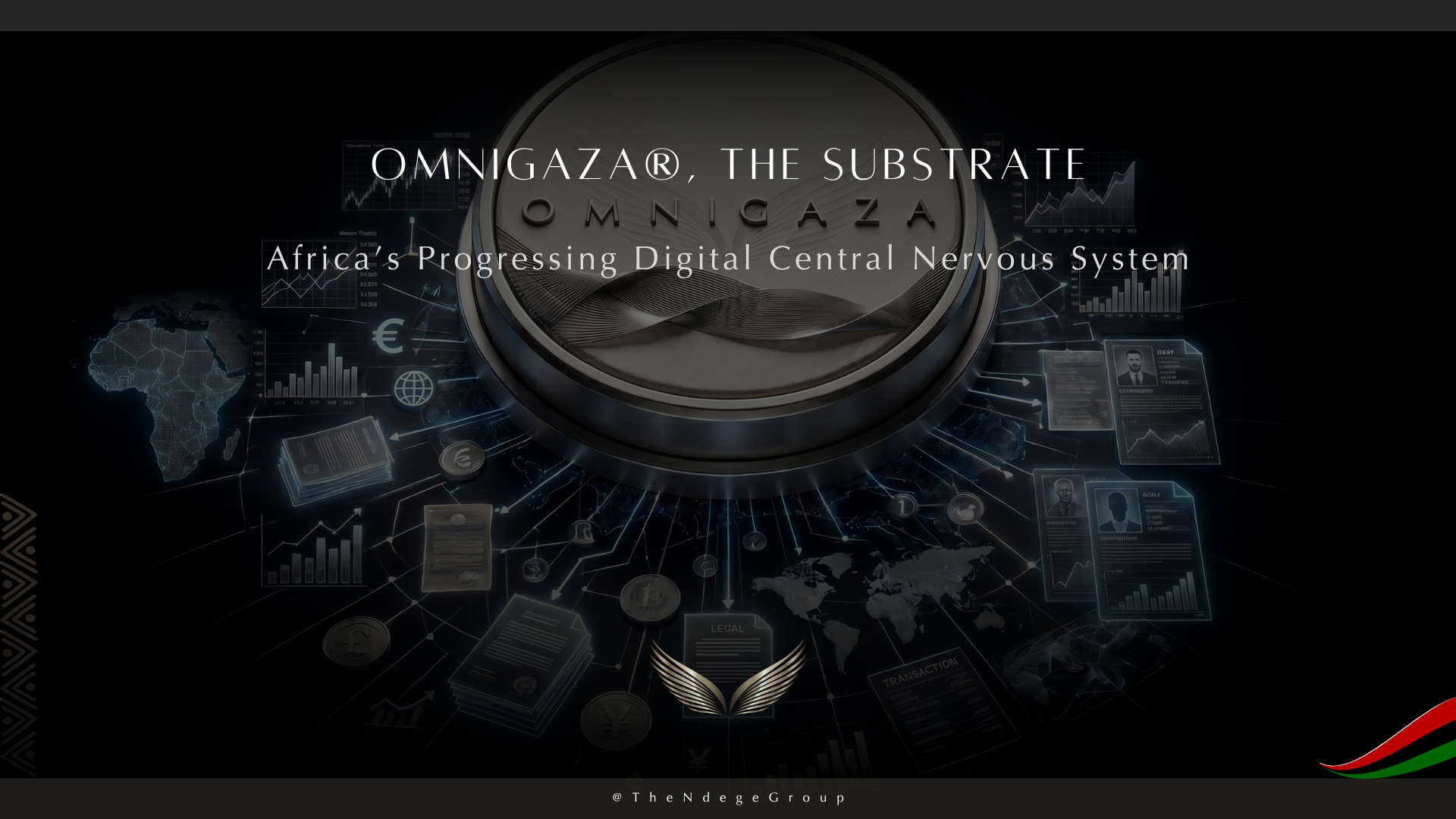
Every financial system on earth is a political statement. The architecture of settlement, the routing of capital, the cost of a cross-border transaction, the question of who holds the correspondent account and who does not: these are instruments of governance, and Africa has operated within instruments designed by and for others for two centuries. The consequence is measurable with institutional precision: $88.6 billion leaves the continent annually through illicit financial flows, per verified UNCTAD data, in a continent that simultaneously faces a $200 billion annual financing gap for sustainable development. The mechanism sustaining this arithmetic is infrastructure. A continent whose cross-border transactions must route through correspondent banks domiciled in Brussels, New York, and London, attracting fees exceeding six per cent per transaction, paying the "African Risk Premium" on every instrument of sovereign finance, and watching its commodity exports leave at primary pricing while returning as manufactured goods at a ten to one markup, cannot close that gap through policy alone. It requires a substrate. OmniGaza®, the sovereign blockchain infrastructure of Africa's Sovereign Development Trust® (ASDT®), advancing under the African Federation Treaty Framework© (AFTF©) and formally documented via DOI: 10.5281/zenodo.15061707, is that substrate. This analysis establishes why the settlement layer is the decisive variable in continental sovereignty, documents the precise mechanisms through which OmniGaza® eliminates the structural conditions for illicit flows and correspondent dependency, examines the institutional architecture of the platform across its six operational departments, addresses the three most serious technical and political objections with primary data, and closes with what access to this infrastructure means for the institutions and sovereign entities for whom it was built.
The Settlement Layer as the Decisive Variable in Sovereign Finance
The premise of African financial sovereignty has been articulated with increasing sophistication across the decades since independence. The Abuja Treaty of 1991 specified continental economic integration as a constitutional objective. The AfCFTA, entering into force in 2019 and recording $220.3 billion in intra-African trade by 2024, has demonstrated the appetite for the architecture its rules presuppose. What neither instrument resolved is the settlement layer: the infrastructure through which money actually moves from one account to another, at what cost, under whose audit, and in what currency. As of 2025, an African business making a cross-border payment to a counterpart in an adjacent country pays an average of 6.2 per cent of transaction value in fees, more than double the United Nations target of three per cent, because the transaction must route through a correspondent bank network whose senior institutional nodes are located outside the continent. The SWIFT messaging protocol, incorporated in Belgium and governed by a board whose composition reflects the historic capital centres of global finance, processes the dollar-clearing instruction. An intermediary in the correspondent chain takes a margin. The currency conversion applies a spread. The Financial Stability Board's 2024 consolidated progress report noted that the average cost of a cross-border payment to a low-income country was still more than twice the G20's stated target of one per cent by 2027, a target that has receded further with each annual review. The total cost is a structural toll levied on the infrastructure dependency of a continent whose financial rails were built by external institutions for external purposes.
Three data points establish the material weight of this dependency. To begin with, the Pan-African Payment and Settlement System (PAPSS), launched in January 2022 and connecting 19 countries and 150 commercial banks by 2025, reduced intra-African transaction costs from twelve per cent to three per cent within its operational corridors, per verified reporting from its operator, Afreximbank. PAPSS delivers meaningful cost compression within its operational corridors and remains confined to the retail and commercial payment layer. The sovereign finance layer, covering bond syndication, bullion settlement, project capital disbursement, and the commodity tokenisation transactions that constitute the institutional heart of continental capital markets, operates on a separate correspondent architecture that PAPSS was not designed to address. Second, UNCTAD's research into Africa's extractive commodity exports establishes that gold accounts for 77 per cent of the $40 billion in under-invoiced extractive exports from the continent, with diamonds at twelve per cent and platinum at six per cent. Under-invoicing in extractive trade is a settlement-layer phenomenon: it is made possible by the absence of an immutable, sovereign-administered audit trail on commodity transactions. Where the ledger is controlled by the intermediary, the intermediary controls the record. Third, the World Bank's Remittance Prices Worldwide database confirms that Sub-Saharan Africa remains the most expensive remittance destination globally, averaging 8.5 per cent per transaction corridor in 2024, against a global average of 6.2 per cent. These three data points share a single structural origin: the absence of a sovereign settlement substrate that the continent administers, audits, and governs.
OmniGaza® is the resolution of that structural condition at the institutional level. Built on the Antelope blockchain protocol, which achieved one-second transaction finality through the Savanna consensus algorithm upgrade completed in September 2024, with OmniGaza® operating at a two-second settlement standard that prioritises sovereign reliability over raw speed, the platform provides an immutable ledger on which every financial flow touching the AFTF© ecosystem is recorded, timestamped, and cryptographically verified before any downstream execution occurs. The settlement layer is the substrate. Every other capability of the platform, including The Ndege Foundation©, the Ndege MarketPlace©, Ndege Aerospace©, The United African Defence Force℠, the Central Bank of Africa℠, and the Pan African Court℠, rests upon the foundational guarantee that every transaction is verifiable, every capital movement is auditable, and no intermediary can alter the record after the fact. The architectural conditions of OmniGaza® make illicit flows structurally impossible within its perimeter: the flows cannot occur because the substrate was designed to foreclose them.
The Immutable Ledger as Anti-Corruption Architecture
Corruption in sovereign finance is an information asymmetry exploited through the absence of a reliable, tamper-proof record of who authorised what, for how much, at what time, and under what contractual conditions. A mutable ledger is a negotiable one. The mechanisms through which $88.6 billion leaves Africa annually include trade misinvoicing, transfer pricing manipulation, profit shifting through offshore holding structures, and the movement of proceeds through a correspondent chain whose intermediate records are inaccessible to the sovereign institutions of the originating country. Each of these mechanisms requires one enabling condition: a gap between the stated value of a transaction and its actual value that cannot be closed by the counterparty at the time of settlement. OmniGaza® closes that gap through the architecture of the ledger itself.
Three cases establish the operational specificity of this claim. For starters, the Ndege MarketPlace© within OmniGaza® operates on the principle that every listed asset is tokenised on the Antelope blockchain at the point of listing, with a SHA-256 hash anchored to the immutable ledger before any trade executes. The current live marketplace carries tokenised positions in AU 99.99 Gold Bullion from Johannesburg at USD 62,400 per kilogram, Congo Cobalt of battery grade from Kinshasa at USD 27,800 per metric tonne, and Zambian Copper Cathode from Kitwe at USD 9,850 per metric tonne, each with a unique token identifier. The price is the ledger price. The settlement is the ledger settlement. There is no gap between the quoted value and the executed value into which under-invoicing can be inserted, because the smart contract escrow executes at the tokenised price or does not execute at all. Additionally, the sovereign registry integration architecture of OmniGaza®, currently active with primary integrations to the Kenya Revenue Authority and the Rwanda Revenue Authority, with 53 remaining AU member states in the onboarding queue, routes tax and customs verification through the same immutable ledger. When a commodity transaction is recorded on the platform, the relevant revenue authority receives a verified, blockchain-anchored record of the declared value at the moment of execution: not a post-transaction report subject to revision, but a primary ledger entry that cannot be altered without triggering a cryptographic audit trail visible to all credentialled parties. What is more, every financial flow within the OmniGaza® Central Bank of Africa℠ suite, covering sovereign bond syndication, bullion registry, and double-entry ledger entries, is blockchain-anchored within sixty seconds of execution via the platform's confirmed asynchronous architecture. The audit trail is complete, immutable, and accessible to the Tier 5 blockchain auditors operating under multi-signature institutional key pairs. The condition for illicit flows is the private ledger. OmniGaza® is the public sovereign one.
| Flow Mechanism | Enabling Condition | OmniGaza® Resolution | Structural Outcome |
|---|---|---|---|
| Trade Misinvoicing | Gap between declared and actual commodity value at settlement | Tokenised asset pricing anchored to immutable ledger before trade execution. Smart contract escrow executes at ledger price only. | No mutable gap for under-invoicing to occupy |
| Correspondent Bank Leakage | Multi-hop routing through external intermediaries with opaque fee structures | Sovereign settlement layer eliminates correspondent dependency for intra-platform transactions. Two-second finality on Antelope substrate. | Fee compression from 6.2% to platform-rate settlement |
| Capital Flight via Transfer Pricing | Offshore holding structures recording intra-group transactions at non-arm's-length prices | All transactions touching AFTF© sovereign registry are blockchain-anchored with revenue authority integration at execution, not reporting. | Revenue authority receives primary record, not secondary report |
| Proceeds Movement through Opaque Chains | Correspondent chain intermediate records inaccessible to originating sovereign | Immutable D1 ledger with SHA-256 anchoring. Every record carries a cryptographic hash verifiable by credentialled institutional auditors. | No opaque intermediate record accessible only to external intermediary |
Table 1. Illicit flow mechanisms and their structural resolution within the OmniGaza® substrate
Six Departments, One Architecture: The Institutional Scope of OmniGaza®
OmniGaza® is continental-scale sovereign infrastructure. Its architecture addresses the full scope of what sovereignty requires, not a single transaction category. Its six departments, comprising The Ndege Foundation©, Ndege MarketPlace©, Ndege Aerospace©, The United African Defence Force℠, Central Bank of Africa℠, and Pan African Court℠, operate on one substrate, one access control architecture, one immutable ledger, and one sovereign identity system. Sovereignty across finance, dispute resolution, trade, and institutional intelligence is indivisible. Partial infrastructure produces partial sovereignty, and partial sovereignty is simply a gap that intermediaries are well-practised at filling. The architecture of OmniGaza® was designed with that reality in view from the first line of code.
The Ndege Foundation© consolidates the platform's continental intelligence and project finance functions. It aggregates continental signals from 30-plus verified open-source feeds, including seventeen live RSS sources covering publications from TechCrunch Africa to Daily Maverick, three Google Alert streams across global Africa-related signals, and 31 paywalled allied sources, with a Signal Origin Map broadcasting live intelligence geographically across the continent. The system logs to the omnigaza_intel D1 database with SHA-256 deduplication and a 90-day rolling retention window. The Foundation also carries the Master Sovereign Investment Agreement (MSIA) register, currently tracking EUR 2.25 billion in syndicated mandates across 19 active projects covering healthcare infrastructure, waste-to-energy, aerospace, hydrogen, and digital infrastructure. Project Kinga Kansa alone, the AI-powered cancer detection network deploying across 12 partner nations at EUR 900 million, represents a class of sovereign health infrastructure investment whose capital structure requires precisely the kind of immutable, compliance-auditable deployment record that the OmniGaza® ledger provides. The Ndege MarketPlace© tokenises African commodity positions on the Antelope blockchain with smart contract escrow, IoT supply chain tracking from origin to delivery, and 2.1-second average transaction finality. Gross merchandise value on the platform is recorded at USD 4.2 billion, with 18,400 verified sellers and a 94.7 per cent settlement rate across 892,000-plus blockchain anchors. Against the backdrop of AfCFTA projections estimating that full implementation could increase intra-African trade by 52 per cent over the next decade, the tokenised commodity layer of OmniGaza® is precisely the settlement infrastructure that those projections presuppose but do not provide. The United African Defence Force℠ operates as the platform's sovereign security and defence finance instrument, providing the institutional capital architecture for continental defence infrastructure under the AFTF© mandate.
The Ndege Aerospace© department is the logistics substrate that gives physical meaning to the platform's commercial infrastructure: continental connectivity, maintenance and repair operations, and the cargo tracking architecture through which a flower buyer in Nairobi watches their shipment from farm to airport, through customs, through the flight, and to last-mile delivery anywhere in the world. The integration of IoT sensor data, blockchain-anchored shipping records, and in-app parcel tracking within a single sovereign platform removes the information asymmetry that has historically allowed intermediaries to extract margin from Africa's physical supply chain at every node of the journey. The Central Bank of Africa℠ and Pan African Court℠ departments operate at Tier 4 sovereign access, requiring WebAuthn multi-factor authentication, institutional IP geo-fencing, and 15-minute non-renewable session tokens. The Central Bank of Africa℠ suite manages bond syndication, the bullion registry, double-entry sovereign ledger entries, and PAPSS settlement integration, with every transaction blockchain-anchored within 60 seconds and all data routed through first-primary database reads to eliminate stale financial data. The Pan African Court℠ suite handles continental arbitration filings, evidence vault management through hash-verified sovereign storage, hearing records, and judgement execution, with every action anchored to the Antelope blockchain within 60 seconds and case records accessible only through judicially issued credential tokens. The architecture does not permit a court judgement to exist separately from its enforcement substrate. The ruling and its execution mechanism occupy the same sovereign platform, by design.
Quantum Readiness, Data Sovereignty, and the End of the African Risk Premium
The African Risk Premium is the additional cost of capital applied to African sovereign borrowers, project financiers, and institutional investors on the basis of perceived political, institutional, and governance risk. It is a quantified additional percentage of yield demanded by international capital markets before money moves from a global institution to an African counterpart. Its persistence is structural: in the absence of a verifiable, real-time, immutable audit trail of financial flows, governance decisions, and contractual execution within a sovereign African infrastructure, international capital markets apply a risk premium to compensate for the information deficit. The premium is the quantified cost of the information deficit that OmniGaza® resolves.
Three dimensions of the platform's technical architecture are directly relevant to the compression of this premium. Firstly, Algorithmic Fidelity: 100 per cent of financial flows within the OmniGaza® ecosystem are tracked on an immutable ledger, providing multilateral development banks, sovereign wealth funds, and institutional investors with real-time visibility into capital deployment that is auditable, cryptographically secured, and architecturally independent of the administrative processes of any single member state. The IFRS S1/S2 alignment embedded in the platform's automated sustainability and financial reporting module means that every capital deployment record within the AFTF© portfolio is simultaneously a compliance record, reducing the due diligence overhead that contributes to the premium's persistence. Secondly, Quantum Readiness: the OmniGaza® infrastructure is advancing toward quantum computing integration by 2030, ensuring that the cryptographic security of the platform's ledger remains ahead of the decryption capabilities that quantum computing will eventually make available to hostile actors. The Sovereign Digital Defence Shield, protecting OmniGaza®'s financial rails and state data from cyber-espionage, constitutes the platform's contribution to the continental data sovereignty architecture described in the AFTF© as a strategic security objective. Thirdly, Locus Chain integration: the platform's dual-blockchain architecture, combining Antelope's two-second finality for transactional throughput with Locus Chain's verification layer for long-duration sovereign record integrity, provides the redundancy appropriate to infrastructure that carries the financial weight of a continent. The architecture was designed for institutional permanence, not product cycles.
The data sovereignty dimension of OmniGaza® deserves equal precision. Africa's sovereign data, covering financial flows, commodity pricing, project performance, intelligence signals, and judicial records, currently processes through infrastructure owned and administered by institutions outside the continent. The OmniGaza® architecture routes all data through Cloudflare's edge network, with sovereign migration to African servers confirmed as a strategic infrastructure objective within the current operational phase. The Ndege Foundation© intelligence database logs to omnigaza_intel D1 with SHA-256 deduplication. The Ndege MarketPlace© database carries sellers, listings, orders, shipments, escrow records, and dispute logs in a sovereign D1 instance. The Central Bank of Africa℠ database holds bond records, the bullion registry, FX rates, sovereign accounts, and double-entry ledger entries, accessible only through first-primary database reads that eliminate the stale data risk that has compromised sovereign financial records in external infrastructure environments. When Africa's data lives on African infrastructure, audited by African institutional actors and secured by a platform whose intellectual property is registered in Kenya under KIPI TM No. 138985, the information deficit that sustains the African Risk Premium begins to close from the inside.
The Architecture of Access: Who the Platform Is Built For, and Why the Security Is Structural
Every access tier in OmniGaza®'s five-level security architecture reflects a political philosophy as much as a technical requirement. The platform encodes the principle that the conditions under which sensitive sovereign data can be accessed, harvested, or used against the continent's interests are designed out of the architecture at the structural level. Working from the base of the architecture upward: Tier 1 covers managers operating through standard JWT authentication with role-based access controls; Tier 2, verified users with standard credential checks. Tier 3 extends to partners authenticated through device fingerprinting and institutional geo-fencing. Tier 4 is sovereign access proper: the AFTF© entities holding state-issued credentials, operating through WebAuthn multi-factor authentication, institutional IP geo-fencing, and 15-minute non-renewable session tokens with zero caching on any sovereign data path. At the apex, Tier 5 covers blockchain auditors accessing read-only records through multi-signature institutional key pairs on session-scoped, single-use credentials. Even administrators operating within OmniGaza® are excluded from data sets they are not cleared to view. The architecture eliminates the conditions under which sensitive sovereign data can be accessed, harvested, or used against the continent's interests. Sovereign data exclusion is a foundational design requirement of the platform.
Three institutional categories define the primary constituency for which OmniGaza® was built. For starters, sovereign states and their revenue authorities: the platform's registry integration architecture, already active with primary connections to the KRA and the RRA, is designed to bring all 55 AU member states into a verified, blockchain-anchored sovereign registry network in which customs data, commodity transaction records, and tax declarations are primary ledger entries rather than secondary reports. The architectural consequence is that the sovereign state receives the institutional information it requires to govern its economy with the same speed and auditability that the intermediaries currently extracting value from that economy have always enjoyed. Furthermore, institutional capital: sovereign wealth funds, development finance institutions, family offices, and multilateral development banks operating under the MSIA's Platinum Strata protocol receive Board-level visibility into capital deployment through an immutable platform whose compliance reporting is automated to IFRS S1/S2 standards. The African Risk Premium is a premium on opacity. OmniGaza® is the technical instrument of transparency. A third constituency worth precision is continental commercial actors: the verified sellers, project finance applicants, aerospace logistics operators, and commodity traders whose access to continental markets has historically been mediated by intermediaries charging for connectivity that a sovereign platform provides at institutional cost. The Ndege MarketPlace©'s 94.7 per cent settlement rate and 2.1-second average finality are operational facts, not projections. The architecture is in production.
OmniGaza® routes continental transactions through a sovereign African substrate. The settlement is African. The ledger is African. The audit is African. The architecture makes every other claim of sovereignty real.
David Okiki Amayo Jr., Founder and Chairman, Africa's Sovereign Development Trust®
The Five Arguments, Consolidated
The case for OmniGaza® as the central nervous system of continental sovereignty rests on five interlocking arguments, each of which has been established with institutional data in the sections above. The opening argument is that the settlement layer is the decisive variable in sovereign finance: that policy frameworks, trade agreements, and development finance instruments cannot achieve their mandated outcomes in the absence of a sovereign, immutable infrastructure through which capital actually moves, and that the existing correspondent architecture is structurally incompatible with continental sovereignty. Equally, the immutable ledger is anti-corruption architecture: that the $88.6 billion in annual illicit flows documented by UNCTAD originates in an information asymmetry exploited through the mutability of existing records, and that a platform on which every transaction is cryptographically anchored at execution closes the structural conditions for those flows at the point of execution. A third proposition, equally load-bearing, is that the six-department architecture reflects the institutional indivisibility of sovereignty: that a continent requiring simultaneous resolution of its institutional intelligence deficit, capital deployment opacity, commodity trade leakage, logistics intermediary dependency, sovereign defence capacity, monetary sovereignty deficit, and judicial enforcement gap is served by an integrated platform, namely The Ndege Foundation©, Ndege MarketPlace©, Ndege Aerospace©, The United African Defence Force℠, Central Bank of Africa℠, and Pan African Court℠, that addresses all of these through one substrate. Furthermore, quantum readiness and data sovereignty are current technical objectives embedded in the platform's confirmed development roadmap, and that the compression of the African Risk Premium is a direct function of the transparency architecture that OmniGaza® provides to the international institutional capital market. And the fifth argument is that the access architecture is itself a sovereign instrument: that a platform which excludes even its own administrators from data they are not cleared to view, which issues 15-minute non-renewable session tokens for sovereign access, and which routes all state financial data through first-primary reads that eliminate stale data risk, has encoded the political philosophy of African sovereignty into the cryptographic structure of the thing itself.
Three Objections, Addressed With Institutional Precision
The opening objection holds that blockchain infrastructure is inherently speculative, associated with volatile digital assets and unproven at the institutional scale required for sovereign finance. OmniGaza® operates on the Antelope enterprise blockchain protocol, a production-grade, institutionally administered, and formally documented technical architecture that achieved one-second transaction finality in September 2024 through the Savanna consensus algorithm and its BLS aggregate signature cryptography. The platform is indexed under DOI 10.5281/zenodo.15061707 and registered under KIPI TM No. 138985 with protection across 170 jurisdictions under the Berne Convention. The OmniGaza® ledger is a settlement infrastructure whose ledger entry carries the value of the verified transaction it records.
A second line of criticism argues that sovereign blockchain infrastructure replicates existing dependency: that a platform requiring external blockchain protocol providers, cloud infrastructure, and technical expertise relocates dependency rather than eliminating it. This objection is correct in identifying the current transitional state of the architecture and incorrect in treating that transitional state as its permanent condition. OmniGaza®'s confirmed strategic roadmap includes migration to African servers, the integration of African sovereign data centres as primary hosting nodes, and the progressive indigenisation of the technical expertise required for platform administration and development. The current operational configuration, using Cloudflare's edge network with Antelope and Locus Chain as protocol layers, is Phase 1 architecture whose design explicitly accommodates the transition to African sovereign infrastructure as those infrastructure nodes are commissioned. What distinguishes OmniGaza® from conventional digital dependency is institutional ownership: the intellectual property is African, the governance is African, and the sovereign data that flows through the platform generates an institutional record that belongs to Africa's Sovereign Development Trust® and the partner states it serves, not to the infrastructure provider hosting the computation.
A third objection contends that the platform's ambition exceeds the current institutional capacity of the continent to operate sovereign blockchain infrastructure at scale, and that the $88.6 billion illicit flow problem is better addressed through strengthened regulatory enforcement within existing financial architecture than through the construction of a parallel sovereign platform. This objection inverts the causal logic of the problem it proposes to solve. Regulatory enforcement within existing financial architecture requires access to the transaction records held by that architecture. Where those records are held by external intermediaries, the sovereign regulatory authority is structurally dependent on the cooperation of the institution it is attempting to regulate. The KRA and the RRA are integrated into OmniGaza®'s sovereign registry not because the platform has displaced their regulatory authority, but because the platform gives them primary ledger access to the transaction records that their authority requires. The platform is the enforcement substrate of the regulatory architecture, not a competitor to it. The objection about institutional capacity, moreover, misunderstands the direction of causation. Institutional capacity is built by operating sovereign infrastructure, not by waiting for it to materialise through deliberation. The platform is in production. The capacity is being built by building it.
The Platform Is in Production. The Question Is the Velocity of the Commitment.
The continental intelligence dashboard of OmniGaza® is operational and broadcasting. The Ndege MarketPlace© carries live tokenised positions across gold, cobalt, copper, cocoa, and coltan, with 892,000-plus blockchain anchors and a 94.7 per cent settlement rate. The Ndege Foundation© carries EUR 2.25 billion in active mandates across its project finance register. The sovereign registry is live with primary KRA and RRA integration. The platform's ASDT-001 sovereign node holds a verified session with Level 5 credentials. The architecture documented in this analysis describes infrastructure that exists, whose technical specifications are publicly registered and academically indexed, and whose operational data is visible to credentialled parties through a live intelligence interface that publishes continental signals on the hour.
The transition from the current operational phase to the full deployment of the Central Bank of Africa℠ and Pan African Court℠ sovereign suites is a function of three concurrent processes: the completion of Phase 1 acceptance criteria, the confirmation of production-node terms with the Antelope partner, and the progressive onboarding of the 53 remaining AU member state registry integrations currently in the sovereign queue. Each process is advancing. The public beta for testing is scheduled, with early access to the continental intelligence dashboard available now. The platform requires the operational commitment of the institutions and sovereign entities for which it was built: the commitment that transforms it from a sovereign infrastructure serving early adopters into the continental substrate serving the continent.
Africa's financing gap is $200 billion annually. Illicit flow losses run to $88.6 billion annually. Every cross-border transaction bears a correspondent banking cost exceeding six per cent. Commodity export under-invoicing strips $40 billion in recoverable value from the continent each year. The IMF has separately noted that closing Africa's infrastructure gap could lift GDP by as much as 1.5 percentage points annually, a compounding dividend that only sovereign infrastructure can unlock. These figures share one structural origin and one resolution. The substrate is OmniGaza®. It is built. The continent's central nervous system is under establishment. The question, as it has always been in moments of genuine institutional construction, is not whether the architecture is sufficient. It is whether the institutions that stand to benefit from it will move at the velocity the moment requires.
Africa's Sovereign Development Trust®. (2026). OmniGaza® Master Architecture Reference V4.0. Nairobi: The Ndege Group®. Zenodo. doi.org/10.5281/zenodo.15061707
Amayo Jr., David Okiki. (2026). From Aspiration to Architecture: A Draft Constitution for the African Federation (Version 4.0). Nairobi: The Ndege Group®. Zenodo. doi.org/10.5281/zenodo.19646816
Amayo Jr., David Okiki. (2025). The African Federation Treaty Framework©. The Sandton Symposium. Zenodo. doi.org/10.5281/zenodo.17670879
African Export-Import Bank (Afreximbank). (2025). African Trade Report 2025: Intra-African Trade and AfCFTA Progress. Cairo: Afreximbank. afreximbank.com
Channelwise. (2026, May). AfCFTA will ease continental trade. channelwise.co.za
EOS Network Foundation. (2024, September 26). EOS Network significantly upgrades with 1-Second Transaction Finality. Globe Newswire. globenewswire.com
Financial Stability Board (FSB). (2024). G20 Roadmap for Enhancing Cross-border Payments: Consolidated Progress Report 2024. Basel: FSB. fsb.org
Kenya Industrial Property Institute (KIPI). (2025). Industrial Property Journal No. 2025/06: TM No. 138985 (OmniGaza®). Nairobi: KIPI.
Messari. (2024). State of EOS Q2 2024. messari.io
Moneyweb. (2025, October). Say goodbye to SWIFT fees for cross-border payments. moneyweb.co.za
Swift. (2025, September 25). Swift to set new rules for retail cross-border payments on its network. Brussels: Swift. swift.com
UN Trade and Development (UNCTAD). (2020). Economic Development in Africa Report 2020: Tackling Illicit Financial Flows for Sustainable Development. Geneva: UNCTAD. unctad.org
UN Trade and Development (UNCTAD). (2024). Defining, Estimating and Disseminating Statistics on Illicit Financial Flows in Africa. Geneva: UNCTAD. unctad.org
United Nations Office of the Special Adviser on Africa (OSAA). Tackling Illicit Financial Flows in Africa Arising from Taxation and Illegal Commercial Practices. New York: UN. un.org/osaa
World Bank. (2025). Remittance Prices Worldwide Database: Q4 2024. Washington DC: World Bank Group. remittanceprices.worldbank.org