
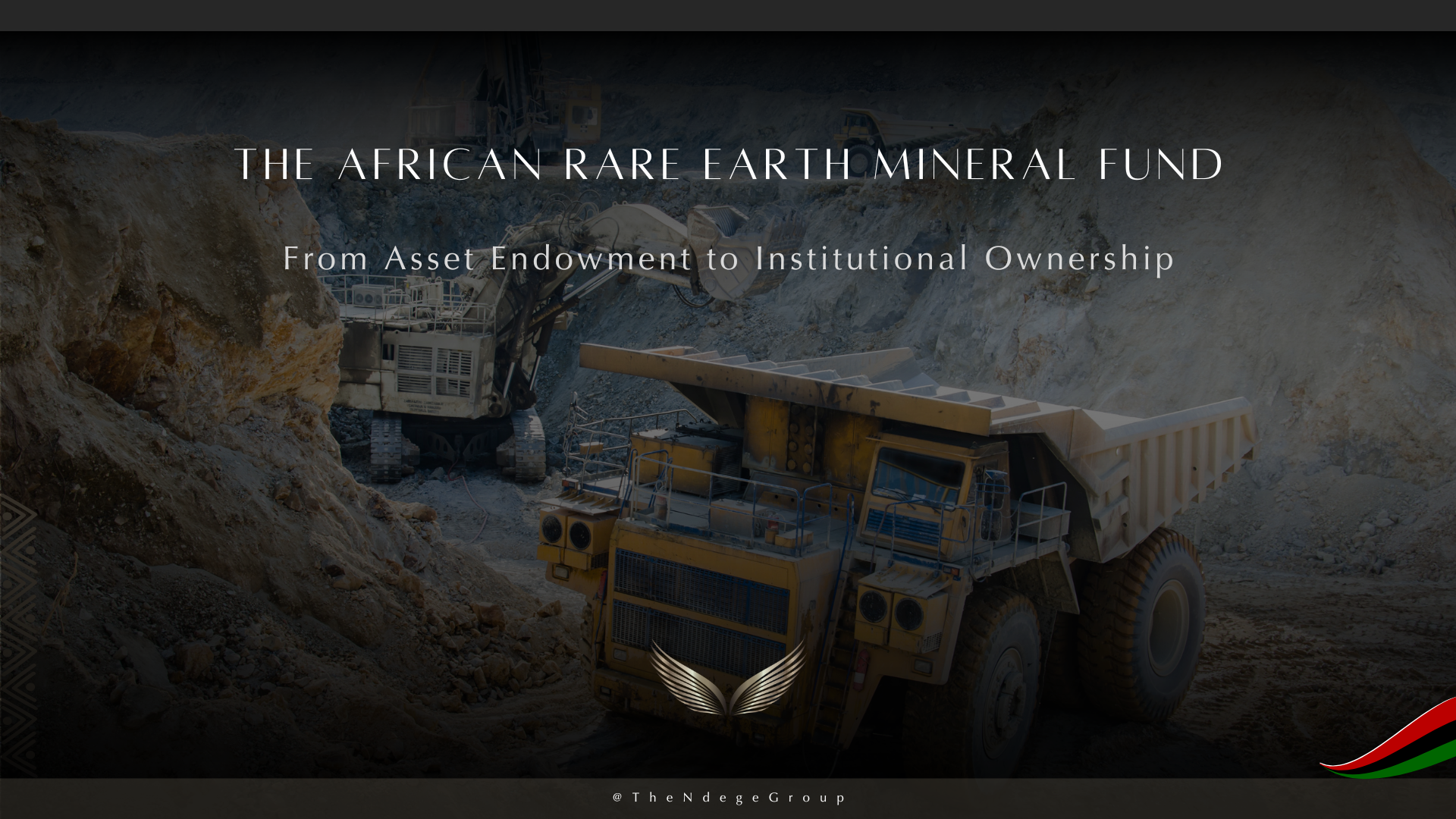
The Democratic Republic of Congo alone holds an estimated 55 per cent of global cobalt reserves and supplies roughly three quarters of the world’s mined cobalt output, per United States Geological Survey 2024 Mineral Commodity Summaries. South Africa holds 80 per cent of the world’s platinum group metal reserves per the same USGS assessment. South Africa also holds approximately 70 per cent of global chromium reserves, a mineral with no viable substitute in stainless steel and superalloy manufacturing, according to the South African Department of Mineral and Petroleum Resources 2024 assessment. These figures are confirmed across every serious geological authority tracking global reserves. Equally confirmed, and considerably less discussed in the boardrooms that price these commodities, is that the continent supplying the majority of the world’s most critical minerals retains less than 7 per cent of their eventual market value, according to the United Nations Economic Commission for Africa’s 2023 assessment of value addition in African extractive industries. The gap between the DRC’s dominant position in global cobalt supply and the fraction of cobalt’s realised value it captures is the direct result of a value chain architecture in which raw ore leaves African soil, is refined, processed, and manufactured into batteries, superalloys, and catalytic converters overseas, and returns to African markets as an imported finished product at a price multiple of what the continent was paid for the raw material. The African Rare Earth Mineral Fund©, advancing under the African Federation Treaty Framework©, is the institutional architecture designed to close that value chain permanently. No mineral endowment, anywhere in the world, has ever converted itself into industrial ownership and manufacturing capacity on its own. That conversion has always required an institution built specifically for the purpose. This fund is that institution.
The Extraction Architecture and Its Arithmetic
The gap between African mineral abundance and African mineral wealth is the product of a value chain architecture built, financed, and owned almost entirely outside the continent whose soil supplies the raw material. Cobalt mined in Kolwezi in the Democratic Republic of Congo travels to refineries in China, which processed approximately 74 per cent of the world’s mined cobalt into battery grade material in 2023, according to Benchmark Mineral Intelligence’s 2024 supply chain assessment. The refined product is then sold into battery manufacturing supply chains at a value multiple several times the price paid to the Congolese mine. Global cobalt demand reached nearly 200,000 tonnes in 2023, more than double 2016 levels, driven overwhelmingly by battery manufacturing, according to the African Development Bank’s 2024 cobalt sector assessment. Refining capacity on African soil remains at only 3 per cent of the world total, concentrated in Madagascar and Morocco, per the same AfDB data, whilst China refines the substantial majority of the world’s mined cobalt into battery grade material. The DRC supplies the material. Foreign refiners realise the far larger share of its eventual value.
Three additional examples establish the pattern with precision. First, South African platinum group metals. South Africa mines the majority of the world’s platinum and palladium, yet the country’s own Minerals Council South Africa reported in its 2023 industry survey that beneficiation, meaning the local processing of raw ore into higher value intermediate and finished products, accounts for a minority share of the sector’s total export value, with the majority of PGM exports still leaving the country as unrefined or semi-refined concentrate destined for further processing in European and Asian refineries. Secondly, Guinea’s bauxite. Guinea holds approximately a quarter of the world’s bauxite reserves and became the world’s largest bauxite exporter by volume in 2024, yet the country’s sole alumina refinery has the capacity to process less than 3 per cent of its annual bauxite output, according to the African Green Minerals Observatory. Guinea exports the raw ore and imports the refined aluminium products its own bauxite eventually becomes, at a market value six to seven times higher than the raw material it sold. Thirdly, Zambian and Congolese copper. The Copperbelt region supplies a significant share of global copper concentrate, yet regional smelting and refining capacity remains insufficient to process the region’s own output, requiring continued export of unrefined concentrate even as global copper demand, driven by electrification and grid infrastructure expansion, is projected by the International Energy Agency to require a doubling of global copper supply by 2035.
The pattern repeats itself, almost mechanically, across commodity after commodity: African extraction feeds foreign refining, foreign refining feeds foreign manufacturing, and foreign manufacturing sells finished products back into African and global markets at a price that captures the overwhelming majority of the value chain outside African jurisdiction. The cost of that arrangement to the producing state is not abstract. Cobalt prices fell to a nine year low of roughly $10 per pound in early 2025, a level the DRC’s own finance ministry could not sustain against a national budget substantially dependent on mining royalties, and the government’s response, an outright export suspension in February 2025 that more than doubled the price within weeks before the country transitioned to an annual quota system that autumn, is instructive precisely because it was a unilateral act of price defence, undertaken by a state with no alternative refining capacity of its own and no ownership stake in the downstream market to fall back on. A producer that must halt all exports simply to arrest a price collapse is a producer trading on volume alone, without the ownership stake in downstream value that would otherwise cushion the fall. The African Rare Earth Mineral Fund© exists to interrupt that underlying pattern at its source, consolidating mineral assets under African institutional ownership before the value chain has the opportunity to migrate offshore, so that price defence need not depend on the blunt instrument of an export ban alone. The same discipline that closes this pattern in mineral value chains is already visible in a second domain: the continent’s determination to govern the physical territory through which that value must ultimately move.
Sovereign Borders as the Precondition for Sovereign Resources
Africa is waking up to something its history has taught it, repeatedly and at great cost: unsecured borders and unsecured resources are the same vulnerability, expressed in two different domains. The continent’s coastlines, land borders, and exclusive economic zones have, across centuries, been the entry points through which external actors have extracted African labour, African minerals, and African autonomy, from the transatlantic slave trade through colonial partition to contemporary illegal fishing fleets and unlicensed mining operations. The Unified African Maritime Border mandate, advancing under the AFTF©, is under establishment because the continent is recognising that mineral sovereignty and border sovereignty are two expressions of a single discipline. A mineral fund that consolidates ownership onshore realises its full value only once the coastline through which that mineral eventually ships is governed with equal rigour.
Three documented cases demonstrate the scale of the exposure. First, illegal, unreported, and unregulated fishing. The High Level Panel for a Sustainable Ocean Economy estimates Africa loses between $10 and $23 billion annually to IUU fishing conducted by distant water fleets operating in African exclusive economic zones without adequate monitoring, according to a 2023 assessment. Secondly, artisanal and unlicensed mineral smuggling. The DRC’s own Ministry of Mines estimated in 2022 that a substantial share of the country’s cobalt and gold production leaves the country through unlicensed artisanal channels that bypass formal export taxation and traceability systems entirely, feeding into international supply chains without the country ever recording the transaction. Thirdly, the Gulf of Guinea maritime crime corridor. The International Maritime Bureau recorded that the Gulf of Guinea accounted for 95 per cent of global crew kidnappings at sea between 2020 and 2024, a security vacuum that directly raises insurance premiums and shipping costs for the legitimate mineral and commodity exports that do move through licensed channels.
The historical pattern is unambiguous and Africans understand it intuitively even where the language of policy has been slow to catch up. People have always come to take from Africa, and at the most brutal extreme of that history, they came to take Africans themselves. The instinct now advancing across the continent, to close its own borders to malicious actors and restrict unauthorised access to its own resources and its own people, is a correction three centuries overdue and increasingly within the continent’s own capacity to enforce. A continent that controls its maritime and territorial borders is a continent capable of enforcing the traceability, taxation, and licensing regimes that keep mineral value onshore, precisely the institutional precondition the African Rare Earth Mineral Fund© requires to function as designed. Border sovereignty and mineral sovereignty converge as a single project, each strengthening the other as both mature.
Why the African Union Cannot Do This Alone
The African Union was founded with a mandate broad enough to encompass the full scope of continental economic integration, carried by a legal architecture whose enforcement powers have not yet grown to match that ambition. This is a structural observation, verifiable in the AU’s own founding instruments, that the organisation possesses no supranational legislative authority capable of directly imposing binding economic policy on its 55 member states in the manner that, for instance, European Union regulations bind EU member states without requiring separate domestic ratification in every case. AU decisions require consensus or supermajority agreement among sovereign states that retain full authority to ignore, delay, or selectively implement continental commitments, and the AU possesses limited enforcement mechanisms against a member state that simply declines to comply.
Three examples illustrate the consequence of this structural gap. First, the African Continental Free Trade Area itself, signed by 54 of 55 AU member states, had seen only 37 of them submit the tariff schedules required to trade under its terms by October 2024, according to the AfCFTA Secretariat’s own tracking, a pace that will accelerate once the remaining member states align their domestic tariff schedules on a binding continental timeline. Secondly, the African Mining Vision, adopted by the AU in 2009 with an explicit mandate to maximise local value addition before mineral export, has after 15 years produced only 23 national mineral development policies attempting to operationalise its principles, per AU Commission monitoring, a fifteen year gap between continental aspiration and national implementation that reflects the absence of any enforcement lever. Thirdly, public trust in continental political institutions has measurably eroded. Afrobarometer’s own trend data, drawn from repeated surveys across dozens of African countries, found that the share of Africans who say they trust their national Parliament fell from 52 per cent in the 2011 to 2013 survey round to 33 per cent in the 2021 to 2023 round, a decline mirrored across other political institutions over the same period. A continental body drawing its legitimacy from 55 national governments cannot be insulated from a trend of that scale, and a trust deficit of that magnitude compounds the AU’s structural inability to legislate directly, because power, in any political system, resides where people believe it resides, and an institution built on the confidence of national governments finds its already limited authority further diminished as that confidence erodes at the source.
Many individuals have served the AU with genuine commitment across its history, and they deserve that acknowledgement alongside an honest account of the institution’s structural limits. An institution built on the consensus of 55 sovereign governments finds its strongest momentum when that consensus is reinforced by dedicated execution partners. The continent is moving toward precisely that model. Younger populations, diaspora capital, and results-oriented institutions are increasingly the ones deciding where continental legitimacy actually sits. The African Union needs partners capable of building and operating the specific mechanisms, funds, treaties, and enforcement architectures that its own founding structure was never designed to construct unilaterally. That is precisely the collaborative space in which Africa’s Sovereign Development Trust® was established to operate.
The Institutional Partnership the Continent Requires
Africa’s Sovereign Development Trust® describes its mission and vision in a single sentence on its own institutional landing page: the Principal Executing Institution for the Establishment and Management of The African Federation. That sentence is deliberately precise. It positions ASDT® as the executing partner of the African Union, the African Development Bank, and Afreximbank, delivering through concrete legal, financial, and technological instruments the vision those institutions have articulated for decades, at the pace the continent’s resource base and demographic trajectory now demand.
Three institutional facts establish why this partnership model is the correct one. First, the African Development Bank’s own African Economic Outlook 2023 identifies value addition and beneficiation of Africa’s mineral resources as one of the continent’s highest priority development interventions, an assessment that the AfDB’s project finance and policy advisory instruments are best positioned to advance in partnership with a dedicated asset consolidation vehicle built for that specific purpose. Secondly, Afreximbank’s African Trade Report 2023 explicitly identifies critical mineral value chains as a strategic priority for continental trade financing, and Afreximbank has committed capital to processing infrastructure in several member states, a trade finance mandate that pairs naturally with a dedicated asset consolidation and governance vehicle operating alongside it. Thirdly, the AU Commission’s own 2009 African Mining Vision explicitly calls for the kind of continental mineral asset coordination the African Rare Earth Mineral Fund© is designed to provide, a policy document whose vision, 15 years on, is now ready for the execution mechanism that pairs the AU Commission’s policy authorship with dedicated asset management and treaty enforcement infrastructure.
The African Rare Earth Mineral Fund©, operating under the AFTF©, is that execution mechanism, complementing the respective mandates of the AU, the AfDB, and Afreximbank and providing the institutional layer each has identified as necessary: a treaty-governed vehicle capable of consolidating mineral assets under unified African ownership, closing the value chain from mine to manufactured product through the Ndege MarketPlace© distribution and trade infrastructure, and operating under the constitutional authority of the African Charter©, a constitutional foundation the AU, the AfDB, and Afreximbank are each well placed to build upon through direct collaboration. ASDT®’s founding purpose is the execution of the federation those institutions have spent decades advancing through consensus, and the coming decade is positioned to be the one in which that consensus finds its execution partner.
From Geological Endowment to Industrial Ownership
At its core, the African Rare Earth Mineral Fund© exists to convert raw mineral endowment into vertically integrated industrial ownership, a transformation that closes the value chain at every stage from extraction through refining to manufactured product, consolidating what has historically fragmented across multiple foreign jurisdictions into a single continental structure. This model has a proven precedent in the global mineral economy. Norway’s sovereign wealth fund, built on direct oil and gas resource ownership, held approximately $1.6 trillion in assets by 2024, the world’s largest sovereign wealth fund, a scale achieved precisely because Norway retained ownership stakes across the value chain in addition to taxing extraction. Chile’s state owned copper company, Codelco, retains state ownership across mining and initial processing, generating direct fiscal revenue at a scale that ownership consistently outperforms royalty alone in achieving.
The African Rare Earth Mineral Fund© applies this ownership logic to cobalt, platinum group metals, chromium, lithium, and graphite, consolidating physical mineral assets, verified through the OmniGaza® substrate’s digital provenance architecture, under a unified continental ownership structure that supersedes the fragmented royalty and concession arrangements that currently characterise most African mineral jurisdictions. Three specific mechanisms illustrate the model in operation. First, physical vaulting and provenance verification, whereby mineral assets are registered, tracked, and vaulted at ASDT®’s facilities with blockchain verified chain of custody records, ensuring that value creation from the point of extraction onward is captured and recorded under African institutional ownership, with full transparency in place of the opacity that has historically characterised international trading intermediaries. Secondly, the fund’s capitalisation mechanism directly backs both Ndege Gold© and Ndege Money©, meaning mineral wealth converts directly into sovereign monetary capacity, an active institutional asset from the moment of consolidation onward. Thirdly, the fund’s mandate explicitly includes downstream manufacturing partnership development, meaning the objective extends to building the battery and superalloy manufacturing capacity that captures the full value multiple currently realised in China, the European Union, and the United States.
This architecture is not confined to design, and the DRC itself has, independently of any single institution, already demonstrated the appetite for exactly this kind of assertion. Confronted with a cobalt price that had collapsed to a nine year low by early 2025, the government suspended cobalt exports outright in February of that year, extended the suspension twice through the following months, and then replaced it with an annual export quota system administered by its own regulatory authority, ARECOMS, reserving a tenth of future volumes explicitly for domestic strategic processing projects, according to reporting by S&P Global and Fastmarkets. It is worth stating plainly what this episode also reveals, because a serious reader will draw the harder conclusion unprompted if the article does not draw it first. A state defending its price purely by refusing to sell is a state still working without the ownership stake, in refining and manufacturing, that would let it capture value as demand rises instead of merely rationing supply as prices fall. Sovereign willingness and sovereign capacity are two separate achievements, and the export ban demonstrates the first while exposing the continuing absence of the second. What it confirms, credibly, is a government prepared to act, unilaterally and at real short term fiscal cost, in defence of the value its soil produces. That willingness is the precondition for the harder work of ownership that follows it.
It is against that backdrop that the African Rare Earth Mineral Fund©’s engagement with the Ministries of Mines and of Rural Development should be read, as the early architecture of a partnership still under construction. ASDT® operates, through a licensed cooperative and an accompanying export company established under Congolese law, an active gold processing operation within the jurisdiction, the fund’s first working proof that mineral value can be captured onshore, beyond simply being tracked onshore. On the strength of that operating record, the fund has been invited to sit with the ministries to deliberate a resource for infrastructure framework, structured around modernised, traceable systems in place of the opaque concession arrangements the extraction architecture described earlier in this article has historically relied upon, and built to convert a share of mineral value directly into the roads, power, and processing infrastructure the value chain requires to move downstream at all. Deliberation is not agreement, and the distinction matters more here than almost anywhere else in this article. What can be said, and no more, is this: a fund with an operating gold processing base and a seat at that table stands further along than a fund holding only a treaty and an ambition, and the ministries’ willingness to deliberate at all, extended by a government that has just shown the world it will act unilaterally to defend a fair price, reads as confidence built on results already delivered.
The scale of the opportunity this closes is considerable. The global lithium ion battery market was valued at approximately $65 billion in 2023 and is projected by the International Energy Agency to exceed $100 billion by 2030, driven by electric vehicle adoption and grid scale storage deployment. Africa currently captures a fraction of that value despite supplying the majority of the cobalt those batteries require. The African Rare Earth Mineral Fund© is designed to ensure that as global demand for these minerals accelerates through the energy transition, the value captured accelerates with it inside African institutions, on a trajectory the fund is built specifically to compound.
Africa has spent five centuries watching others grow wealthy from what lies beneath its soil. The African Rare Earth Mineral Fund© is the institutional mechanism by which that soil finally belongs, in full economic consequence, to the people who stand on it.
David Okiki Amayo Jr., Founder and Chairman, Africa’s Sovereign Development Trust®
A Summary of the Sovereign Case
Five pillars have been examined in this article. The extraction architecture and its arithmetic, documented through the DRC cobalt value gap, South African platinum beneficiation shortfalls, Guinean bauxite export dependency, and Copperbelt smelting capacity constraints. The recognition that sovereign borders are the precondition for sovereign resources, established through the Unified African Maritime Border mandate and the documented scale of IUU fishing losses, artisanal mineral smuggling, and Gulf of Guinea maritime crime. The structural case for institutional partnership, grounded in the AU’s consensus based legislative design, the AfCFTA implementation trajectory, the 15 year African Mining Vision execution horizon, and the Afrobarometer trust data. The institutional partnership model through which ASDT®, the AfDB, Afreximbank, and the AU collaborate according to their respective founding mandates. And the ownership transformation mechanism itself, converting geological endowment into vertically integrated industrial capacity through physical vaulting, Ndege Money© capitalisation, and downstream manufacturing partnership development.
| Strategic Metric | Current Fragmented Extraction Model | African Rare Earth Mineral Fund© |
|---|---|---|
| Value Retention | Under 7% of eventual market value retained on the continent (UNECA 2023) | Vertically integrated ownership from extraction through manufacturing under African institutional control |
| Cobalt Value Chain | Cobalt price collapsed to a nine year low near $10/lb in early 2025, forcing an outright DRC export suspension to defend value (S&P Global, Fastmarkets) | Physical vaulting and provenance verification retain value creation onshore via OmniGaza® substrate |
| Refining Capacity | 74% of global cobalt refined in China; majority of African PGM exported as unrefined concentrate | Downstream manufacturing partnership development mandate embedded in fund architecture |
| Border Security | $10 to $23 billion lost annually to IUU fishing; fragmented naval and customs enforcement | Unified African Maritime Border coordination as precondition for onshore value retention |
| Institutional Enforcement | AU consensus model; no supranational legislative authority; African Mining Vision unexecuted after 15 years | Treaty governed execution vehicle under AFTF©; direct asset consolidation authority |
| Capitalisation Mechanism | Royalty and concession based fiscal capture; passive geological asset awaiting foreign purchase | Direct backing of Ndege Gold© and Ndege Money©; mineral wealth converts to sovereign monetary capacity |
| Institutional Trust | 52% to 33% decline in political institutional trust across the continent, 2011 to 2023 (Afrobarometer) | Execution focused mandate designed to rebuild demonstrable continental delivery capacity |
| Market Positioning | Price taker in globally set commodity markets with no downstream leverage | Vertically integrated ownership positions the continent as price setter in critical mineral supply chains |
Table 1. Current Fragmented Extraction Model vs. African Rare Earth Mineral Fund©: Strategic Comparative Analysis. Sources: USGS 2024; UNECA 2023; Benchmark Mineral Intelligence 2024; AfDB African Economic Outlook 2023; Afrobarometer 2024; AFTF© v3.1.
Three Objections, Resolved on Their Merits
First: the sovereignty consolidation objection. Critics argue that consolidating mineral assets under a single continental fund transfers sovereign resource control away from individual member states, undermining the constitutional right of each nation to govern its own natural resources. This objection deserves the serious engagement that follows.
The AFTF©’s Master Sovereign Investment Agreement addresses this directly through its tiered onboarding structure, in which member states retain full domestic legal ownership and regulatory authority over mineral resources within their territory while voluntarily contributing designated assets to the fund’s consolidated ownership and marketing structure in exchange for the value chain benefits, capital access, and manufacturing partnership opportunities that individual national mining ministries have, across decades, been unable to secure independently. No member state surrenders resource sovereignty. Each gains access to the collective bargaining position, refining infrastructure investment, and manufacturing partnership pipeline that fragmentation across 55 separate national mining authorities has never produced. The DRC negotiating cobalt terms alone faces different leverage than the DRC negotiating as part of a continental consolidation representing 70 per cent of global reserves.
Secondly: the execution risk objection. Sceptics point to the African Mining Vision’s 15 year implementation gap and ask what distinguishes the African Rare Earth Mineral Fund© from another well intentioned continental initiative that fails to translate policy into operational reality.
The distinguishing feature is institutional design. The African Mining Vision was a policy document requiring 55 separate national governments to voluntarily align domestic legislation with continental principles, awaiting a dedicated executing institution to carry it forward. The African Rare Earth Mineral Fund© supplies precisely that institution: a treaty governed operational vehicle under the AFTF©, with ASDT® as dedicated executor, physical asset vaulting already underway at ASDT®’s facilities, and direct capitalisation linkage to operational instruments including Ndege Gold© and Ndege Money© that are already functioning. Policy documents advance furthest once paired with an execution mechanism. This fund is that mechanism.
Furthermore: the foreign capital and expertise objection. Industry analysts argue that mineral refining and advanced manufacturing require capital intensity and technical expertise that African institutions are still building, making foreign refining partnership a practical feature of the transition period ahead.
This objection correctly identifies a genuine and temporary constraint. The African Rare Earth Mineral Fund© welcomes foreign capital and technical partnership, structured so that it operates on terms set by African ownership, a distinction with material financial consequence for every tonne of mineral the continent exports. Joint venture refining and manufacturing partnerships, structured with the fund holding majority equity and governance control while foreign partners contribute capital and technical expertise on commercial terms, allow the continent to access the capital and expertise it requires without surrendering the ownership stake that has historically been the difference between supplying the world’s minerals and profiting from them. Botswana’s diamond partnership with De Beers demonstrates the model in practice, and its most recent chapter demonstrates something further: an ownership share negotiated at founding is only ever a starting position, subject to renegotiation once the partner state has built the leverage to press for more. The Debswana joint venture, in which the Botswana government has held a 50 per cent equity stake since 1975, initially capped the government’s own share of physical production, sold through its state owned marketing arm, the Okavango Diamond Company, at 25 per cent, a ceiling that held for over a decade. Under the ten year sales agreement concluded in February 2025, that allocation was renegotiated upward to 30 per cent immediately and 40 per cent within five years, and Botswana’s government has since pressed further still, seeking to convert its existing minority shareholding in De Beers itself into a controlling stake as the parent company, Anglo American, moves to exit the business entirely. A continent that consolidates its mineral ownership under a single treaty governed structure is a continent positioned to press that same renegotiation, product by product, on its own timeline, on the strength of its own leverage instead of a foreign parent’s balance sheet.
The Sovereign Obligation and the Invitation to Engage
I have spent this article demonstrating a single proposition, with as much data as the subject deserves, because a claim this old, and this large, has earned the right to be argued in full. Africa’s mineral wealth has always been the foundation. What has been missing is the will made structural: the institutional architecture required to retain, refine, and manufacture that wealth on African soil, the variable this generation is positioned to complete, built by an institution with the specific treaty authority, asset consolidation capacity, and execution mandate the task requires.
The African Rare Earth Mineral Fund© is that institution’s mineral mandate. It operates under the AFTF© alongside the Central Bank of Africa℠, the United African Defence Force℠, and the Unified African Maritime Border, four instruments addressing four faces of the same sovereignty deficit. I built Africa’s Sovereign Development Trust® to be the Principal Executing Institution for the Establishment and Management of The African Federation because the vision of a federated, mineral sovereign, industrially self sufficient continent has been articulated by African statesmen, economists, and institutions for generations. What has been missing is the how. The African Federation Treaty Framework© is the how. The African Rare Earth Mineral Fund© is one of its principal mechanisms: a treaty governed vehicle now in its early operating phase, with initial vaulting and provenance infrastructure under construction, direct capitalisation linkage to Ndege Gold© and Ndege Money© specified in its governing instruments, and its founding premise, that the gap between continental vision and continental execution can be closed by an institution built specifically to close it, now being tested in real jurisdictions and not only argued in policy papers.
The path from here to a continent that sets prices instead of merely taking them is a matter of sequence, and the sequence is already legible in what has been built. A licensed cooperative and export company processing gold within Congolese jurisdiction is a small fact against a $29.5 trillion continental endowment, and it is offered here as exactly that: small, real, and the only kind of fact that earns a seat at a ministry table. That seat, built on the treaty and reinforced by an operating record, is what positions the fund to convert the DRC’s demonstrated willingness to defend its mineral value into the structural capacity that willingness alone cannot supply, folding cobalt, platinum group metals, and chromium into the same ownership architecture as it matures, jurisdiction by jurisdiction, the way Botswana converted a 1975 equity stake into a 2025 renegotiation and a 2026 bid for outright control. The global battery materials market the DRC’s cobalt feeds is on a trajectory from $65 billion in 2023 toward $100 billion by 2030. A fund that owns the mine, the vault, and an increasing share of the refining capacity between them captures that growth as it happens, instead of watching it accrue, once again, somewhere else. That is the win this fund is built to deliver, and it is being built in the order that durable ownership actually requires: proof first, partnership second, scale third, so that when the continent finally speaks as one voice in these markets, it speaks from ownership already in hand.
The complete constitutional and institutional architecture of the African Rare Earth Mineral Fund©, the African Federation Treaty Framework©, and the AFTF© provisions governing continental mineral sovereignty is published in full and permanently archived at doi.org/10.5281/zenodo.18365997. Mining ministers, AU Commission officials, AfDB and Afreximbank leadership, mineral sector investors, and diaspora capital are invited to engage directly with the institutional design at the African Rare Earth Mineral Fund© programme page and the Ndege MarketPlace© distribution infrastructure. All formal engagement, collaboration proposals, and institutional feedback should be submitted through the Strategic Executive Office of Africa’s Sovereign Development Trust®. The architecture is ready. The soil has waited long enough. The invitation is open.
Amayo Jr., David Okiki. (2026). The African Federation Treaty Framework©: Version 3.1. Operational Architecture for Continental Socioeconomic Sovereignty. Zenodo. doi.org/10.5281/zenodo.18365997
Afrobarometer. (2024). Across Africa, Public Trust in Key Institutions and Leaders is Weakening. Accra: Afrobarometer. afrobarometer.org
African Continental Free Trade Area Secretariat. (2024). AfCFTA Implementation Progress Report 2024. Accra: AfCFTA Secretariat. au-afcfta.org
African Development Bank Group. (2023). African Economic Outlook 2023: Mobilizing Private Sector Financing for Climate and Green Growth in Africa. Abidjan: AfDB. afdb.org
African Export-Import Bank (Afreximbank). (2023). African Trade Report 2023: Trends in Global and Regional Value Chains. Cairo: Afreximbank. afreximbank.com
African Union Commission. (2009). Africa Mining Vision. Addis Ababa: AUC. au.int
Benchmark Mineral Intelligence. (2024). Cobalt Supply Chain Report 2024: Refining Capacity and Geographic Concentration. London: Benchmark Mineral Intelligence. benchmarkminerals.com
African Development Bank Group. (2024). Critical Mineral Insights: Cobalt Factsheet. Abidjan: AfDB. afdb.org
High Level Panel for a Sustainable Ocean Economy. (2023). IUU Fishing: The Hidden Cost to African Coastal Economies. Washington DC: World Resources Institute. oceanpanel.org
African Green Minerals Observatory. (2024). Guinea: Bauxite Reserves, Production, and Refining Capacity Assessment. africangreenminerals.com
International Energy Agency. (2024). Global Critical Minerals Outlook 2024: Copper and Battery Metals Demand Projections. Paris: IEA. iea.org
International Maritime Bureau. (2024). Piracy and Armed Robbery Against Ships: Annual Report 2023. London: ICC International Maritime Bureau. icc-ccs.org
Minerals Council South Africa. (2023). Facts and Figures 2023: Beneficiation and Export Value Analysis. Johannesburg: Minerals Council South Africa. mineralscouncil.org.za
South African Department of Mineral and Petroleum Resources. (2024). Critical Minerals and Metals Strategy: Reserve Assessment for Platinum Group Metals, Chromite, and Manganese. Pretoria: DMPR. gov.za
Ministry of Mines, Democratic Republic of Congo. (2022). Artisanal Mining Sector Assessment: Cobalt and Gold Export Traceability. Kinshasa: Ministry of Mines. mines-rdc.cd
Norges Bank Investment Management. (2024). Government Pension Fund Global: Annual Report 2024. Oslo: NBIM. nbim.no
United Nations Economic Commission for Africa. (2023). Economic Report on Africa 2023: Value Addition and Beneficiation in African Extractive Industries. Addis Ababa: UNECA. uneca.org
United States Geological Survey. (2024). Mineral Commodity Summaries 2024: Cobalt, Chromium, Platinum Group Metals. Reston, VA: USGS. usgs.gov/minerals
S&P Global Market Intelligence. (2025). DRC Cobalt Export Ban Extension to Support Prices on Enhanced Tightness. New York: S&P Global. spglobal.com
S&P Global Market Intelligence. (2025). DRC Cobalt Export Quotas to Support Cobalt Prices, Though Challenges Loom. New York: S&P Global. spglobal.com
Fastmarkets. (2025). DRC Cobalt Export Ban: When Will Market Tightness Hit? London: Fastmarkets. fastmarkets.com
Debswana Diamond Company. (2025). Our Shareholders. Gaborone: Debswana. debswana.com
National Jeweler. (2024). State of the Diamond Industry: Botswana Beyond Diamonds. nationaljeweler.com
MINING.COM. (2026). As De Beers Bid Deadline Looms, Botswana Pushes for Control. mining.com